
One of the most common hurdles for aspiring artists is choosing a style. Here are five questions that will lead you in further developing your artistic style. Take the time to carefully explore each one, and you will be well on your way to creating art that is consistent and unique to you.
1. Why am I drawing?
I think the best way of developing your own style is by asking yourself this question: “What do I want to do with my drawing skills? ” Your end goal will help determine the foundation of your style. If you want to be a children’s book illustrator, for example, your style is going to vastly differ from the work of someone who draws medical illustrations.
Choosing one “big picture” goal will help you decide what little steps need to be taken to improve your art. Is your greatest dream to draw fantasy book covers? Or is it to be a character designer for video games? Maybe you don’t care about finding a career and just want to draw out your own stories in a consistent style. Regardless of what drives you to draw, pinpointing the why behind your style is the first step in creating it.
2. What genre am I drawing in?
Now that we’ve determined your purpose for drawing, let’s determine your art’s genre, or cultural category. Do you want to draw cute, whimsical animal characters? Or realistic-looking fashionistas? Are you making action comics, or drawing peaceful, impressionistic scenery? You likely have some idea of the type of things you like to draw. Write down a few words to describe the category you’d like to create in. Find some artists you like who work in that category. What do you like about their work? What about their art would you want to emulate? Studying the art of others in your desired field will help you learn how to make art in that same genre.
3. How much will my art reflect reality?
Illustration is about capturing the idea of something. Say, for instance, you make an illustration of a giraffe. Does it have to have perfect anatomy to give the viewer the ability to identify the animal? Certainly not! A hyper-realistic portrait artist would want to see exactly where each spine in the neck bends and how the light shines off of the giraffe’s eyeballs. A children’s illustrator would simply draw a head, long neck, torso, and four legs. Maybe they would add a couple dots as eyes, and they would of course depict the giraffe’s brown spots. How much detail is necessary to the drawing? That is up to the artist. If you are developing a style, the amount of realism should be consistent across your drawings. Maybe your style will even have a mix of realism levels. Some artists like to place realistic characters in unrealistic backgrounds! Practice drawing simple things, like household items, with as much detail as possible, and then with as little as possible. This is a great practice to learn how to tweak details to show different levels of realism.
4. How do I want to use the elements of art?
Finally, we reach what is the most fun part (in my opinion) of style development: the elements, or building blocks, of art. There are four crucial elements to illustration: shapes, lines, colors, and textures. These are all crucial to style; the consistency of these four things is how others will be able to look at your art and know it was made by you.
Let’s start with shapes. How are you going to use shapes? (All drawings are made out of shapes, of course.) This will be partially decided by how much realism you are using. For example, I like to use a lot of straight, acute triangles in my art.
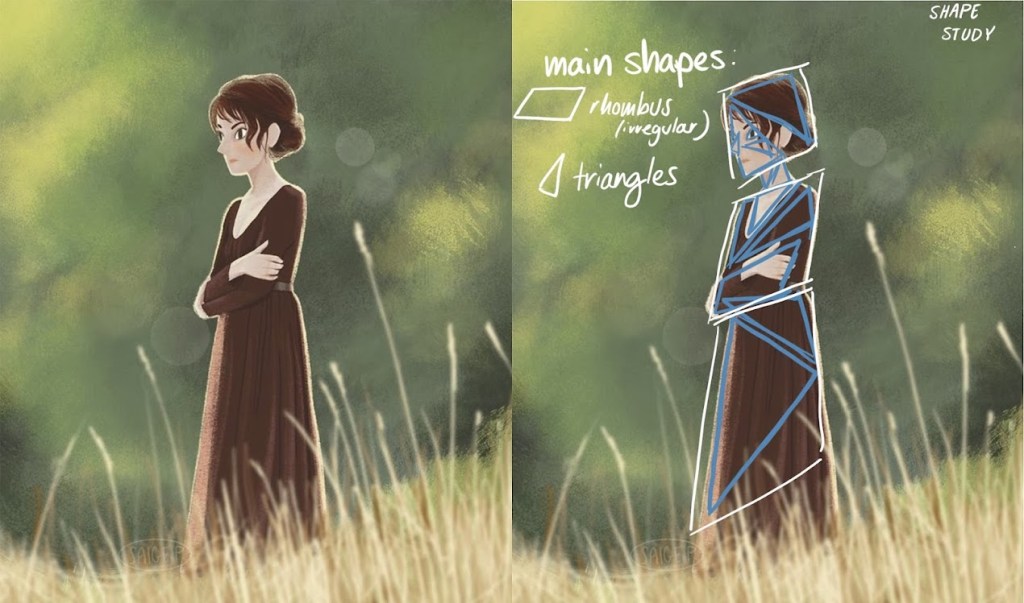
A lot of animation studios will use rounded shapes to give their characters a cuter look. You can study art you’ve already made to see what shapes you tend toward using, or you can study the art of others to learn to use shapes in ways you may not have considered.
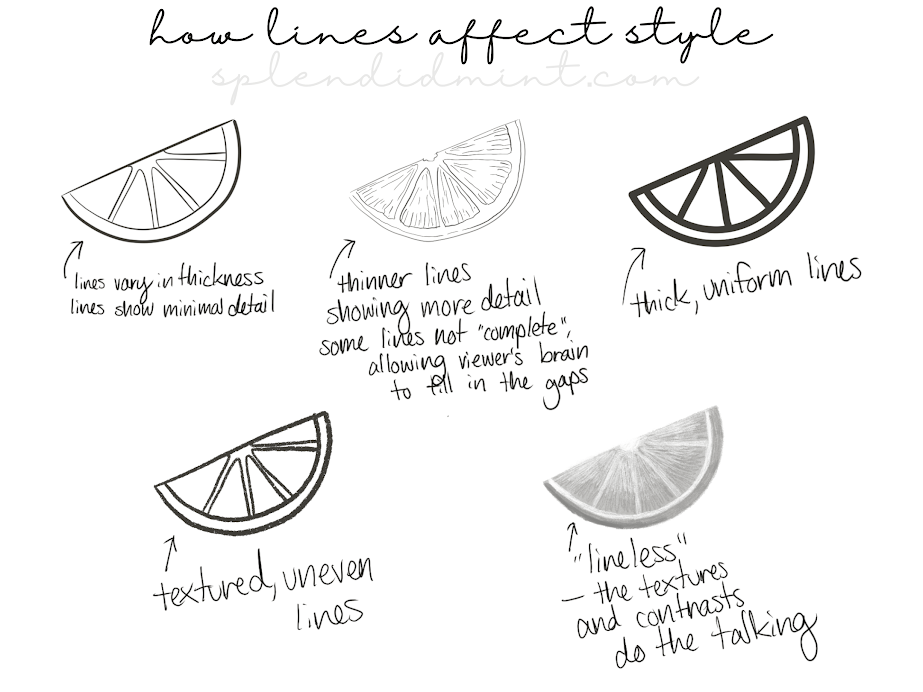
Next is lines. Are you going to use thin lines, or thick lines? Comics classically use thick, black lines and depict shadows through the linework. I particularly enjoy making lineless art where the shapes, textures and colors do all the talking. The medium you use may be a factor in choosing what kind of lines you make.
Colors. How are you using colors? Do you tend towards a specific palette, or do you use whatever colors you feel like? Do you tend to use muted, neutral colors, or bright, complementary ones? If you are not familiar with color theory, I strongly suggest finding some YouTube videos or doing a quick Google search on color theory.
Textures. Texture is especially important to choose when you are making digital art. Traditional art often has its own natural textures: the grain of the paper, the wash of the paint, the roughness of the pencil, etc. In digital art, you can make textures by using different brushes, using a textured background, or drawing in the details of a texture. Certain genres of art may not need any texture at all. Most webcomics and cartoons, for example, do not use any texture because it would take too much time to texturize each panel and frame. Deciding how you will use textures will help your art have a defined, consistent look.

5. Who is my target audience?
Throughout each step of developing your style, try to keep in mind who is your audience. If you are drawing for your own enjoyment, you do not need to worry about your audience. If you are drawing to build a portfolio and find a job, you have to cater to the desires of your clients. Think of what sort of illustrating jobs you want. What kind of customers would be interested in the services you want to provide? Put yourself in the shoes of those who want to hire or buy art from an illustrator, and you will better understand how to develop a style that sells.
Let’s pretend you want to paint and sell fantasy landscapes. Who would be interested in buying your paintings? What kind of people are they? What are their other interests? Understand your potential customers, and you will gain clear ideas of what they like.
Always remember…
Don’t be too concerned with your style; it will never be totally concrete. Be open to change, because you will want to change the way you draw as you continue to grow and improve your skills. Art is a field with endless possibilities; you are only limited by what you think you can and can’t do!


